Mohamed Ramadan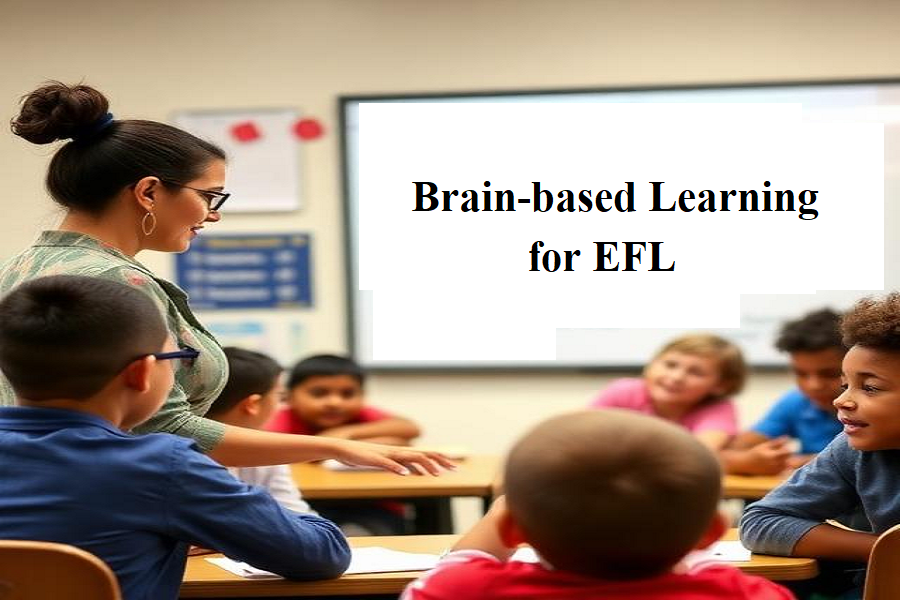
In today’s rapidly evolving educational landscape, English as a Foreign Language (EFL) teachers are constantly seeking methods that are not only engaging but also grounded in science. One approach that continues to gain momentum is brain-based learning for EFL, a methodology rooted in how the brain naturally learns, processes, and retains information.
Brain-based learning is built on insights from neuroscience and cognitive psychology. It emphasizes teaching in ways that align with the brain’s natural functions rather than working against them. When applied effectively, brain-based learning for EFL helps teachers design lessons that are more engaging, memorable, and impactful.
This approach is guided by 12 core principles that explain how the brain learns best. By applying these principles in EFL classrooms, teachers can unlock students’ full potential and significantly improve language acquisition.
The 12 Brain-Based Learning Principles and Their Application in EFL Classes
1. The Brain Is a Parallel Processor
The brain processes thoughts, emotions, and physical actions simultaneously.
EFL Application:
Use multisensory activities—combine listening with movement, visuals, gestures, or real objects when teaching vocabulary and structures.
2. Learning Engages the Entire Physiology
Learning is influenced by physical well-being, emotions, and environment.
EFL Application:
Create a comfortable classroom atmosphere and integrate movement-based techniques such as Total Physical Response (TPR).
3. The Search for Meaning Is Innate
The brain naturally seeks meaning and relevance.
EFL Application:
Connect language input to real-life situations using authentic materials, role plays, and task-based learning.
4. Meaning Is Formed Through Patterning
The brain organizes information by identifying patterns.
EFL Application:
Highlight grammar patterns, collocations, and word families using charts, timelines, and mind maps.
5. Emotions Are Critical to Learning
Emotion strongly influences memory and retention.
EFL Application:
Utilize storytelling, humour, role-playing, and emotionally engaging topics to boost motivation and enhance recall.
6. The Brain Processes Parts and Wholes Simultaneously
Learners grasp details better when they see the bigger picture.
EFL Application:
Teach grammar and vocabulary within meaningful contexts rather than in isolation.
7. Learning Involves Focused Attention and Peripheral Perception
Students learn from both direct instruction and their surroundings.
EFL Application:
Use posters, word walls, and visual cues to reinforce language exposure beyond explicit teaching.
8. Learning Involves Conscious and Unconscious Processes
Not all learning happens intentionally.
EFL Application:
Combine explicit instruction with implicit exposure through songs, videos, and extensive listening or reading.
9. The Brain Has Multiple Memory Systems
Rote and spatial memory work together.
EFL Application:
Pair memorization with movement, location-based activities, and classroom routines to strengthen recall.
10. Learning Is Developmental
The brain develops gradually and remains plastic throughout life.
EFL Application:
Use age-appropriate tasks and scaffold learning to match students’ cognitive development.
11. Learning Thrives on Challenge, Not Threat
Moderate challenge enhances learning, while fear inhibits it.
EFL Application:
Encourage risk-taking in speaking, provide supportive feedback, and avoid overcorrection.
12. Every Brain Is Uniquely Organized
Learners differ in preferences, strengths, and experiences.
EFL Application:
Differentiate instruction and assessment to meet diverse learning styles and needs.
Conclusion
Integrating the 12 principles of brain-based learning for EFL can fundamentally transform language classrooms. When teaching methods align with how the brain learns best, students become more engaged, confident, and successful language users.
By embracing brain-based learning for EFL, teachers move beyond intuition and tradition toward evidence-informed practice. The result is a classroom that not only supports language acquisition but also nurtures critical thinking, creativity, and a lifelong love of learning.
The future of EFL education lies in understanding the brain—and teaching with it in mind.
If you want to get trained to teach EFL abroad and online and get certified, click below to download a FREE TEFL brochure

About the Author