Mohamed Ramadan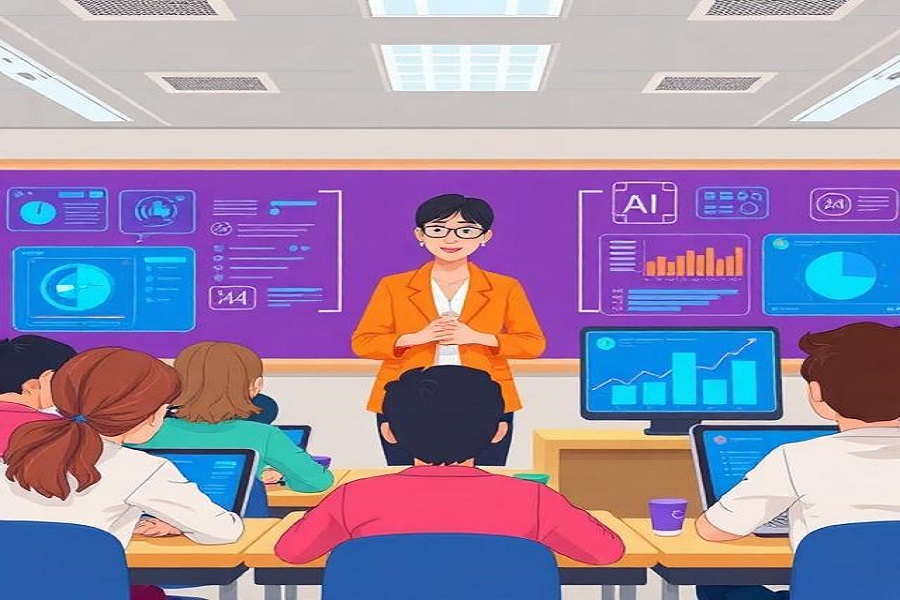
Artificial intelligence is no longer a futuristic concept reserved for science fiction or advanced research labs. Today, AI in education is steadily reshaping how teaching and learning take place across schools, universities, and professional training environments.
From personalized learning paths to automated assessment, AI technologies are changing not only what learners experience but also how teachers design, deliver, and evaluate instruction.
This transformation does not mean replacing teachers. Instead, it signals a shift toward more data-informed, learner-centered, and flexible educational systems—where human expertise and intelligent tools work together.
Below are 13 key ways AI in education is expected to transform teaching and learning in the coming years, along with what these changes mean for educators.
1. Personalized Learning at Scale
One of the most powerful contributions of AI in education is its ability to personalize learning. AI-driven systems can analyze learners’ performance, preferences, and pace, then adapt content accordingly. This allows students to receive targeted practice, enrichment, or remediation—something that is difficult to achieve consistently in large classes.
For teachers, this means less time spent creating multiple versions of materials and more time focusing on meaningful instruction and support.
2. Adaptive Learning Pathways
AI-powered platforms can design adaptive learning pathways that change in real time. When a learner struggles with a concept, the system can provide additional explanations, examples, or practice. When mastery is demonstrated, learners can move ahead without unnecessary repetition.
This approach supports mastery-based learning and helps reduce frustration for both high- and low-performing students.
3. Smarter Assessment and Feedback
Traditional assessment often focuses on final answers rather than the learning process. AI tools can evaluate patterns in learner responses, track progress over time, and provide immediate, detailed feedback.
In writing tasks, for example, AI can highlight issues related to grammar, coherence, or organization, allowing teachers to focus on higher-order skills such as argumentation and critical thinking.
4. Reduced Administrative Work for Teachers
Grading, attendance tracking, and reporting consume a significant portion of teachers’ time. AI in education can automate many routine administrative tasks, freeing educators to concentrate on lesson planning, feedback, and learner interaction.
This shift has the potential to reduce burnout and improve overall teaching quality.
5. Data-Informed Instructional Decisions
AI systems can analyze large amounts of learning data to identify trends that may not be immediately visible. Teachers can use these insights to adjust instruction, identify at-risk learners early, and refine teaching strategies.
When used ethically, learning analytics can support more responsive and inclusive teaching.
6. Support for Inclusive and Special Education
AI tools can support learners with disabilities by offering speech-to-text, text-to-speech, real-time translation, and customized interfaces. These tools help remove barriers and promote equitable access to learning.
In inclusive classrooms, AI can help teachers better accommodate diverse needs without lowering expectations.
7. Intelligent Tutoring Systems
AI-powered tutoring systems can simulate one-to-one support by guiding learners through problem-solving processes, asking adaptive questions, and offering hints rather than direct answers.
While these systems cannot replace human teachers, they can provide valuable additional support—especially outside classroom hours.
8. Enhanced Language Learning
In language education, AI in education is already transforming how learners practice and receive feedback. Speech recognition tools can assess pronunciation, chatbots can simulate conversations, and adaptive systems can tailor vocabulary and grammar practice.
For language teachers, AI offers opportunities to extend practice beyond the classroom while maintaining individualized support.
9. Curriculum Design and Optimization
AI can assist curriculum designers by analyzing learner outcomes and engagement data to identify which materials and sequences are most effective. This allows for continuous improvement rather than static curriculum models.
Teachers can also use AI tools to generate supplementary materials aligned with learning objectives.
10. Real-Time Learning Support
AI-driven systems can provide learners with real-time assistance during tasks, such as hints, reminders, or guiding questions. This supports independent learning while reducing reliance on constant teacher intervention.
Such support encourages learners to develop autonomy and problem-solving skills.
11. Professional Development for Teachers
AI can personalize professional development by recommending resources, courses, or communities based on teachers’ interests, experience, and classroom challenges.
As AI in education evolves, ongoing teacher training will become more targeted, flexible, and relevant to real classroom needs.
12. Ethical and Responsible Use of Technology
The growing role of AI raises important ethical questions related to data privacy, bias, and transparency. Educators and institutions must ensure that AI tools are used responsibly and that human judgment remains central.
Teaching learners to understand and evaluate AI systems critically will also become an essential educational goal.
13. Redefining the Teacher’s Role
Perhaps the most significant impact of AI on education is its reshaping of the teacher’s role. As routine tasks become automated, teachers will increasingly act as facilitators, mentors, and designers of meaningful learning experiences.
Human qualities—empathy, creativity, ethical judgment, and pedagogical insight—will remain irreplaceable.
Final Thoughts
The future of education is not about choosing between humans and machines. It is about building learning environments where AI in education supports personalization, inclusion, and informed decision-making—while teachers remain at the heart of the learning process.
Educators who engage critically and proactively with AI will be better prepared to shape its role, ensuring that technology serves learning rather than defining it.
As AI continues to evolve, the challenge for education will not be whether to adopt it, but how to use it wisely, ethically, and effectively.
Teaching The Four English Language Skills—A Comprehensive Guide
That’s why I’ve prepared this guidebook. Click here to learn more about it.
About the Author