How Real-Life Tasks Can Transform English Language Learning: A Practical Guide for EFL Teachers
 Mohamed Ramadan
For decades, English language teaching (ELT) relied heavily on traditional methods where the teacher explained grammar, students memorized vocabulary, and learning was measured by written tests. While these methods can help students acquire linguistic knowledge, they often fail to develop what learners truly need—the ability to use English confidently in real-life situations.
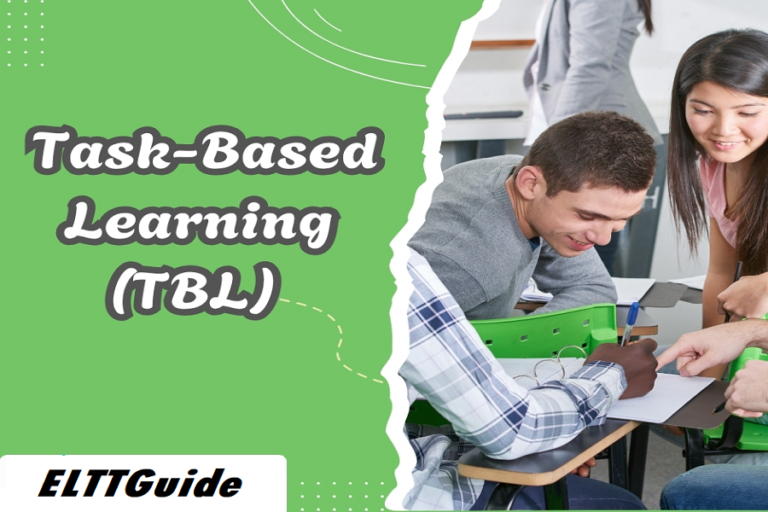
Modern language teaching has shifted its focus from learning about English to using English. One of the most influential approaches supporting this shift is Task-Based Learning (TBL). Rather than making grammar the starting point, Task-Based Learning begins with a meaningful task that encourages learners to communicate, solve problems, and collaborate using English.
This article compares traditional teaching with Task-Based Learning, explains the simple task cycle, highlights the characteristics of an effective task, and demonstrates how EFL teachers can implement a real classroom task successfully.
Traditional Teaching vs. Task-Based Learning
Although both approaches aim to help students learn English, they differ significantly in philosophy, classroom practices, and learning outcomes.
|
Traditional Teaching |
Task-Based Learning |
|
Teacher-centered. |
Learner-centered. |
|
Focuses on grammar first. |
Focuses on meaningful communication first. |
|
Students practice language forms. |
Students use language to complete tasks. |
|
Accuracy is emphasized. |
Fluency and communication take priority over refinement. |
|
Students often work individually. |
Students frequently work in pairs and groups. |
|
Language is the goal. |
Completing the task is the goal, with language serving as the tool. |
| Learning often ends with an exercise. |
Learning ends with a meaningful product or decision. |
Imagine teaching the topic of renewable energy.
In a traditional classroom, the teacher may introduce vocabulary, explain grammar structures, and ask students to answer comprehension questions.
In a Task-Based Learning classroom, students are asked to decide which renewable energy source would be the best choice for a new community. To complete the task, they naturally use vocabulary, ask questions, negotiate ideas, justify opinions, and present their conclusions.
The language becomes purposeful rather than mechanical.
Why Task-Based Learning Works
Task-Based Learning reflects the way people use language outside school.
In everyday life, we rarely communicate simply to demonstrate correct grammar. Instead, we communicate to achieve something:
- solve a problem
- make a decision
- exchange information
- persuade someone
- plan an event
- give advice
Task-Based Learning recreates these authentic situations inside the classroom.
Students become active participants rather than passive recipients of information.
The Simple Task Cycle
A successful Task-Based Learning lesson follows a logical sequence consisting of four stages.
1. Pre-Task
The teacher introduces the topic and provides useful language that students may need.
This stage prepares learners without removing the challenge of the task.
For example, if students discuss food waste, the teacher may introduce useful expressions such as
- We should…
- I think…
- In my opinion…
- One solution is…
- We could reduce…
The teacher may also activate background knowledge through pictures, videos, or short discussions.
The goal is to build confidence while maintaining student independence.
2. Task
Students work together to complete the assigned task.
The teacher’s role changes from lecturer to facilitator.
During this stage, learners:
- discuss ideas
- negotiate meaning
- solve problems
- ask questions
- make decisions
- use English naturally
Importantly, the teacher does not interrupt constantly to correct grammar.
The focus remains on communication and successful task completion.
3. Report
After completing the task, students present their ideas or decisions to the class.
Reports may take different forms:
- oral presentations
- posters
- PowerPoint slides
- written summaries
- debates
- group discussions
This stage gives learners a genuine audience and purpose for speaking.
It also encourages accountability because students know they will share their work.
4. Language Focus
Only after communication has taken place does the teacher focus on language.
During this stage, the teacher:
- reviews useful vocabulary
- highlights effective language students used
- corrects common errors
- explains grammar that emerged naturally during the task
Students immediately see why the language matters because they have already used it in meaningful communication.
Characteristics of a Good Task
Not every classroom activity qualifies as a genuine task.
An effective task usually includes four essential characteristics.
1. A Clear Goal
Students know exactly what they are trying to achieve.
Examples include:
- choosing the best solution
- creating a plan
- solving a problem
- making a recommendation
The emphasis is on achieving an outcome rather than completing grammar exercises.
2. A Real Decision
Good tasks require learners to think.
Instead of copying information, students evaluate alternatives, justify opinions, and reach conclusions.
There should be no obvious answer.
Students should have opportunities to disagree respectfully and defend their ideas.
3. Student Interaction
Communication lies at the heart of Task-Based Learning.
Students learn through interaction by:
- asking questions
- negotiating meaning
- sharing opinions
- clarifying misunderstandings
- supporting teammates
Pair work and group work become essential components of learning.
4. A Final Outcome
Every task should produce something meaningful.
Possible outcomes include:
- a presentation
- a class vote
- a written proposal
- a poster
- a recorded video
- an action plan
Students leave the lesson with a tangible product that reflects their learning.
A Real EFL Task in Action
Let’s apply all these principles to a classroom activity suitable for intermediate English learners.
Topic: Reducing Food Waste at School
Learning Objective
Students will work together to design a realistic plan for reducing food waste in their school.
Stage 1: Pre-Task
The teacher introduces the topic by asking:
- How much food do students throw away every day?
- Why does food waste happen?
- How can schools reduce waste?
Useful vocabulary is introduced:
- recycle
- leftovers
- cafeteria
- donate
- compost
- reduce
- waste
- reusable
Students review expressions for making suggestions and agreeing or disagreeing politely.
Stage 2: Task
Students work in groups of four.
Each group receives the challenge:
“Design a practical plan that will reduce food waste in your school.”
Groups discuss:
- What causes food waste?
- Which solutions are realistic?
- Which solution would have the greatest impact?
- How can students participate?
The teacher monitors discussions but avoids interrupting for grammar correction.
The emphasis remains on meaningful communication.
Stage 3: Report
Each group presents its action plan.
Students explain:
- their ideas
- why they chose them
- expected benefits
- possible challenges
The rest of the class asks questions and votes for the most practical proposal.
Now the communication has an authentic audience and purpose.
Stage 4: Language Focus
After all presentations, the teacher highlights examples of effective language used during discussions.
Common mistakes are reviewed, such as:
- incorrect modal verbs
- article usage
- countable and uncountable nouns
- pronunciation difficulties
Instead of isolated correction, the teacher links grammar directly to students’ communicative needs.
Additional Task Ideas for EFL Classrooms
Task-Based Learning can be adapted to almost any unit in the curriculum. Consider these engaging examples:
- Screen Time: Students design a healthy weekly screen-time plan and explain their choices.
- Consumer Choice: Groups compare products and decide which offers the best value for money, justifying their decisions.
- Renewable Energy: Students recommend the most suitable energy source for a new community and defend their proposal with evidence.
- Travel Planning: Learners create a three-day itinerary for international visitors while staying within a budget.
- Community Improvement: Students identify a local problem and develop a practical action plan.
In every case, learners use English to achieve a meaningful outcome rather than simply practice isolated language forms.
The Teacher’s Changing Role
Task-Based Learning transforms the teacher from the primary source of knowledge into a facilitator of learning.
Instead of dominating classroom talk, effective teachers:
- prepare meaningful tasks,
- provide useful language support,
- observe interactions,
- encourage collaboration,
- give constructive feedback,
- and help learners reflect on both the task and the language they used.
This shift fosters greater learner autonomy, confidence, and engagement.
Final Thoughts
Traditional teaching still has value, particularly when introducing complex grammar or building foundational knowledge. However, if our ultimate goal is to help learners communicate effectively in English, classroom instruction must extend beyond explanation and controlled practice.
Task-Based Learning offers a powerful alternative by placing meaningful communication at the center of every lesson. Through a clear task cycle—Pre-Task, Task, Report, and Language Focus—students explore authentic problems, collaborate with peers, and apply English to achieve real outcomes. When tasks also feature a clear goal, a genuine decision, active student interaction, and a tangible final product, learning becomes more engaging, memorable, and transferable.
For EFL teachers, the message is clear: don’t just teach the language—create opportunities for students to use it. When learners solve problems, justify ideas, and present solutions in English, they develop not only linguistic accuracy but also the confidence and communicative competence they need beyond the classroom.
Want to Go Deeper? Get My Comprehensive Guide to Teaching the Four Language Skills Based on TBL
If you found this article helpful, you’ll absolutely love my full-length eBook, Teaching the Four English Language Skills – A Comprehensive Guide. It’s packed with proven techniques, step-by-step procedures, and classroom-ready activities that help you teach listening, speaking, reading, and writing with confidence and clarity.
Inside the guide, you’ll discover:
✔ Practical strategies for teaching each skill—even to struggling learners
✔ Detailed lesson stages, procedures, and activity ideas
✔ Functional language teaching techniques and real-life speaking tasks
✔ Reading comprehension strategies and approaches for beginning readers
✔ A complete process-writing framework, email-writing guidance, and more
✔ Over 90 pages of tips, models, examples, and teacher-friendly explanations
Teach the four English language skills more effectively …
Whether you’re a new teacher or a seasoned educator looking to upgrade your toolkit, this guide will save you hours of planning time and transform the way you teach the four skills.
Click here to get the book now and take your teaching to the next level.
Make your lessons more effective, engaging, and enjoyable—starting today.
About the Author