Mohamed Ramadan
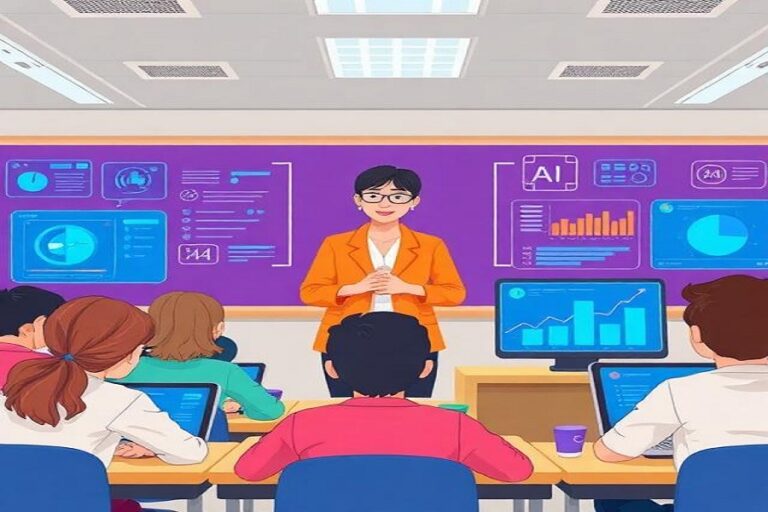
Artificial intelligence is transforming the way professionals communicate in English. Today, AI tools can generate business emails, summarize meetings, correct grammar, and even simulate conversations. With such rapid development, many teachers and learners are starting to ask an important question:
Will AI eventually replace Business English teachers?
The short answer is no. While AI is a powerful tool, it lacks the human understanding, adaptability, and cultural awareness required to teach Business English effectively.
Language in professional contexts is not just about grammar—it is about relationships, tone, persuasion, and social intelligence.
Why AI cannot replace Business English teachers
Below are nine clear reasons why AI cannot replace Business English teachers and why their role is becoming even more important in the modern workplace.
1. Business English Requires Human Communication Skills
Business English is not just a system of rules. It is a tool for interacting with real people in real situations such as meetings, negotiations, and presentations. AI can simulate conversations, but it cannot replicate spontaneous human interaction.
Teachers create dynamic classroom discussions and role plays where students must react in real time, interrupt politely, clarify misunderstandings, and negotiate meaning. These unpredictable interactions are essential for preparing learners for real business environments.
2. Teachers Understand Cultural and Professional Context
In international business, communication styles differ across cultures. For example:
- Some cultures value directness.
- Others prefer indirect and diplomatic language.
AI tools often provide generic responses that may not reflect these cultural nuances. Business English teachers help learners understand how to adapt their language depending on the cultural background of their audience—an essential skill in global workplaces.
This cultural guidance is one of the strongest reasons why AI cannot replace Business English teachers.
3. AI Produces Correct Language—Teachers Teach Effective Language
AI is very good at generating grammatically correct sentences. However, in business communication, correctness is not enough. Messages must also be:
- persuasive
- polite
- concise
- appropriate for the situation
A teacher helps learners choose the right level of formality, soften requests, and avoid language that may sound aggressive or unprofessional. These subtle adjustments are difficult for AI to explain in a meaningful, educational way.
4. Teachers Provide Personalized Feedback
One of the most valuable aspects of language learning is feedback. AI can highlight grammar mistakes, but teachers go further by explaining the following:
- Why something sounds unnatural
- How tone affects meaning
- What alternatives may sound more professional
They also tailor feedback to each learner’s level, goals, and professional background. This personalized guidance is something AI still cannot fully replicate.
5. Teachers Build Confidence and Motivation
Many Business English learners feel anxious about speaking in meetings or writing to senior managers in English. AI tools may help them draft messages, but they do not provide emotional encouragement or motivation.
Teachers create a supportive environment where students feel safe to make mistakes, practice speaking, and gradually build confidence. This emotional and psychological support is a major factor in successful language learning and another reason why AI cannot replace Business English teachers.
6. Teachers Teach Students How to Use AI Responsibly
Ironically, the rise of AI has made teachers even more important. Students now need guidance on:
- When to use AI
- How to write effective prompts
- How to evaluate AI-generated content
- How to edit and improve AI drafts
Without this training, learners may rely blindly on AI and send emails that sound unnatural, too formal, or culturally inappropriate. Business English teachers play a key role in helping learners use AI as a tool rather than a crutch.
7. Teachers Design Structured Learning Paths
AI can generate exercises instantly, but it does not design long-term learning programs. Teachers plan lessons in a logical sequence, ensuring that students gradually develop skills in:
- writing emails
- participating in meetings
- delivering presentations
- negotiating and problem-solving
This structured progression helps learners build competence step by step instead of receiving disconnected pieces of information from AI tools.
8. Teachers Develop Soft Skills Alongside Language Skills
In professional environments, communication is closely linked to soft skills such as:
- teamwork
- leadership
- empathy
- conflict resolution
Business English classes often include group work, role plays, and presentations that help learners develop these interpersonal skills. AI can generate scripts, but it cannot create the human interaction needed to practice and refine these abilities.
9. Teachers Adapt Instantly to Classroom Reality
AI operates based on algorithms and predefined responses. Teachers, however, can instantly change their teaching approach when they notice that students
- look confused
- are not engaged
- need more examples
- or require additional practice
This flexibility allows teachers to respond to real-time classroom dynamics, something AI systems cannot yet achieve effectively.
AI Is a Tool, Not a Replacement
Instead of seeing AI as a threat, Business English teachers should view it as a powerful assistant. AI can help generate:
- lesson ideas
- email examples
- role-play scenarios
- vocabulary lists
However, the teacher remains responsible for selecting, adapting, and explaining this content in ways that support learning.
The future of Business English education is not about AI replacing teachers—it is about teachers who know how to use AI effectively.
Why Business English Teachers Are More Important Than Ever
As AI becomes more common in workplaces, professionals must learn not only how to communicate in English but also how to collaborate with AI tools. This means they need guidance in:
- evaluating automated content
- maintaining authenticity in communication
- ensuring that messages reflect their personal and company values
These are complex skills that require human teaching, discussion, and reflection. These are the strongest reasons why AI cannot replace Business English teachers—their role is evolving, not disappearing.
Final Thoughts
Artificial intelligence has undoubtedly changed the landscape of professional communication. It has made writing faster and more accessible, but it has not replaced the need for human judgment, cultural understanding, and interpersonal skills.
Business English teachers provide what AI cannot:
- human interaction
- emotional intelligence
- cultural awareness
- personalized learning
- and real communication practice
Rather than fearing AI, teachers should embrace it while continuing to focus on the uniquely human aspects of language teaching. In doing so, they will remain essential in preparing learners for the complex communication demands of modern workplaces.
Teaching English Tenses—A Comprehensive Package of Lesson Plans
Even in Business English, correct tense usage is crucial when discussing deadlines, project updates, and past achievements. This book provides ready-to-use lesson plans that help teachers teach tenses clearly and communicatively. Get it from here
Teaching the Four English Language Skills—A Comprehensive Guide
This guide helps teachers design balanced Business English courses that integrate speaking, listening, reading, and writing skills that remain essential despite the rise of AI tools. Get it from here
About the Author