Mohamed Ramadan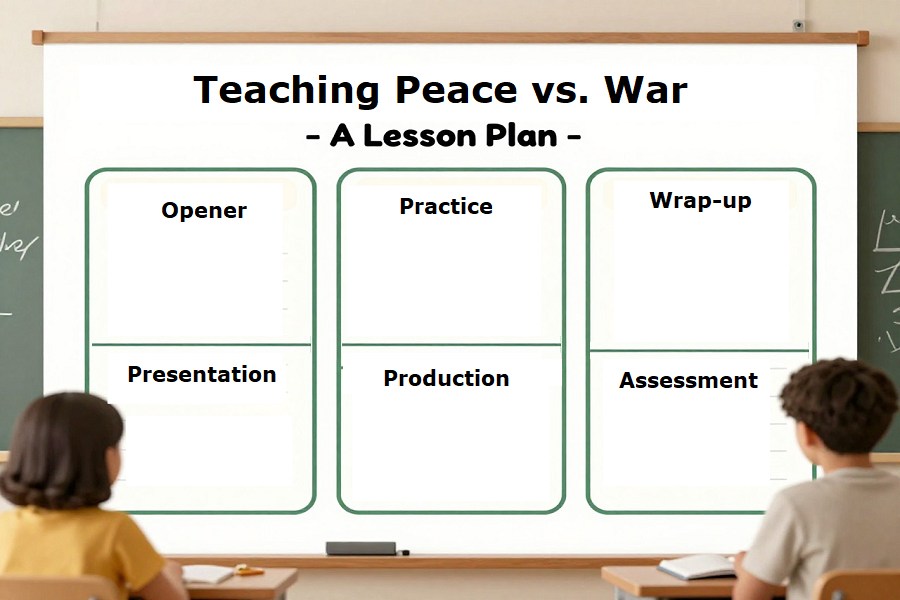
When teaching peace vs. war, students need to understand the differences between peace and war to appreciate the importance of promoting peace in our society.
“Peace” refers to a state of harmony, tranquillity, and non-violence, while war represents a state of armed conflict and hostility.
Causes and Impacts of War
When teaching peace vs. war, students must understand the causes and impacts of war in order to be able to tell how to prevent it in the future.
Some common causes of war include:
- Territorial disputes.
- Political ideologies.
- Economic interests.
- Religious differences.
Wars can have profound impacts on individuals, communities, and nations. The impacts of war can include:
- Loss of life.
- Destruction of infrastructure.
- Displacement of populations.
- Economic instability.
- Long-lasting social and psychological consequences.
Alternatives to Violence and War
Promoting peace and seeking alternatives to violence and war is essential for creating a harmonious and just society.
There are various strategies and approaches to resolve conflicts peacefully. These include:
- Diplomacy
- Non-violent resistance.
By encouraging dialogue and understanding, we can foster a culture of peace and tolerance, where conflicts can be resolved peacefully.
In Brief, when teaching peace vs. war:
It is important for teachers to develop their students’ appreciation of the importance of peace and to discuss with them the causes and impacts of war and alternatives to violence and war.
By understanding these concepts, students can develop critical thinking skills, empathy, and a sense of global citizenship.
A Lesson Plan
Here is a suggested lesson plan to teach the topic “Peace vs. War.”
Grade Level: High school (9th-12th grade)
Objectives:
By the end of the lesson, students will be able to:
- Compare and contrast the concepts of peace and war.
- Analyze the causes and impacts of war.
- Explore alternatives to violence and war.
Materials Needed:
– Whiteboard/chalkboard
– Markers/chalk
– Paper and writing utensils for students
1. Opener (Warm-up Activity) (5 mins):
– Ask students to share what comes to their mind when they hear the words “peace” and “war.” Write responses on the board.
– Explain that today’s lesson will focus on examining these two concepts more deeply.
2. Presentation (10 mins):
– Define peace and war and elicit the causes of war (differences in religion, ideology, etc.).
Small Group Discussion (10 mins):
– Divide students into small groups and assign each group a war to discuss, such as World War 2, the Gaza War, etc.
– Groups will analyze their assigned war and identify the causes and impacts.
Show & Tell (10 mins):
– Have each group present a summary of their findings around the room. Students will come to the front and talk about each war.
3. Practice (10 mins):
– As a class, discuss what was learned about the causes and impacts of war. Ask students if they think war is ever justified.
4. Production (10 mins):
– Have students free-write in their notebooks responding to the prompt:
* How could peace be promoted in our world today?
* What alternatives to war exist?
Then, have some students read what they have written and ask for feedback from other students.
5. Wrap Up after teaching peace vs. war (5 mins):
– Summarize the main ideas covered and have students share their reflections emphasizing alternatives to violence.
6. Assessment:
Ask students to work in groups to create a poster showing the impacts of wars and how to prevent them in the future, and how to spread peace among people all over the world.
Teaching English Tenses—A Comprehensive Package of Lesson Plans
Even in Business English, correct tense usage is crucial when discussing deadlines, project updates, and past achievements. This book provides ready-to-use lesson plans that help teachers teach tenses clearly and communicatively. Get it from here
About the Author